






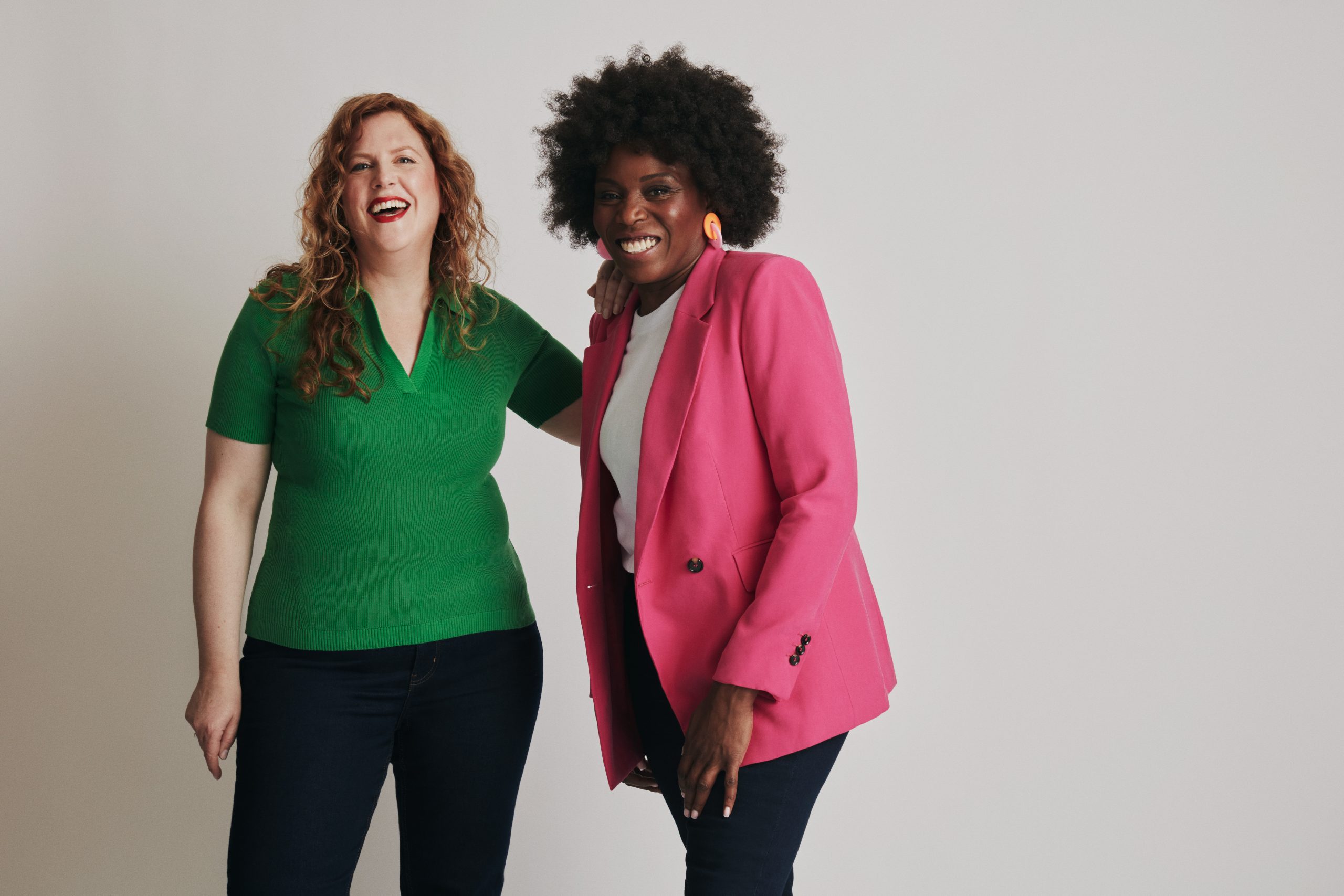
Image credit: Ageism Is Never In Style, as provided in the Age Positive Image Library, Centre for Ageing Better
In this first deep dive into age inclusive experiences, we examine the personal perception vs representation gap. This covers language usage, self identity and representation in marketing, communications and advertising.
Today there is a significant gap between how people feel and how people feel they are represented by brands and seen by others as they age.
A new generation of older people
Older people are living longer, more active, and tech-savvy lives [1, 2, 3] . The modern later-lifestyle can include continued employment, increased travel abroad, campaigning or volunteering, and everyday enjoyments engaging within local and online communities[4, 5, 6, 7].
Those currently ageing into and beyond retirement, the ‘Baby Boomer’ generation, were born 1946 – 1964. They are now 62-80 years of age and are distinctly different to the previous “Keep Calm and Carry On” influenced, ‘Silent Generation’ that came before them and are now over 80. This generation that we increasingly perceive as ‘old’ have grown from childhood to and beyond retirement in an increasingly diverse, global, connected, and technologically advanced society.
They have new generationally relevant influences, influencers and cultural reference points which could have included,
- David Bowie’s Stardust, Pink Floyd’s Dark Side of the Moon, or Queen’s Bohemian Rhapsody which were not just music, they were permission to be different
- Gender rights, second-wave feminism and the sexual revolution, civil rights such as the anti-apartheid movement, Thatcherism, and activism including environmental (Greenpeace was founded in 1971), economic (Live Aid in 1985) to existential (nuclear disarmament)
- The tech hyper-jump from watching large black and white TVs and listening to BBC radio programmes in their childhood, moon landings, computers increasingly influencing their working and home lives (designed, developed and deployed by some of this generation) and now AI increasing its dominance and robotics becoming more pervasive as they step towards retirement. Sci-fi became real.
Whether loved or loathed, these cultural reference points influenced the attitudes, interests and self-perception of this generation of rebels (or not) with or without a cause.
They are a big generation (hence the “Boom” in the ‘Baby Boomers’), born in the peacetime and rapid economic growth post WW2. As a result they are used to products, services and marketing being created and adapted to their needs every time they age up to the next stage of life from babies to children, children to teenagers, teenagers to adults and now working-aged adults to older adults.
Overall, the newer old are wealthier, healthier, more broadly travelled and digitally enabled, with higher customer experience and service expectations than past generations of older people. However the benefits of being a part of this generation are not evenly spread, with healthy life expectancy and wealth deeply impacted by region, ethnicity, gender and other factors [8, 9].
Yet recently, when we asked several of Open Inclusion’s Ageing Authentically Insight Community about their perspectives, we heard that today’s branding, marketing and media often seems uninterested in them or out of touch, inauthentic or patronising. Larger scale UK-wide research supports this, with 88% of older people feeling unhappy about the way advertising represents them, 15% depressed or disheartened and 7% angry[10].
An opportunity for brands
Today, this significant ‘age–perception gap’ is impacting both brand success (brand affinity and sales), and broader social attitudes. Happily, there is a simple cure – meaningful engagement.
Misalignment persists when there is limited engagement with and poor understanding of older people – their diverse realities, attitudes, preferences and experiences.
At Open, we hope to positively influence a more modern, nuanced and relevant understanding of ageing, and what it means for businesses across various sectors. We do this through engaging openly, accessibly and purposefully with older age-informed communities, generating nuanced, authentic insights and co-creating better campaigns with those who have the personal and professional expertise to help close the gap.
In research with our Ageing Authentically Community, they noted that although there is a large gap overall, there are some notable, ‘pitch perfect’ ad campaigns from vanguard organisations like Amazon and Cadbury’s who have realised this enormous opportunity and done it well. These generate strong positive cut through. Represent an under-represented community well and you will be noticed!
5 things that you can do to close the self-identity vs representation gap
We detail each of these further below. However, for those in a hurry, 5 key takeaways for brands and advertisers are:
- Increase the portrayal of older consumers: Include more older individuals in your adverts and marketing materials, including in leading roles and in products and services that are not specifically age related (older people buy all sorts of things!)
- Improve the authenticity of portrayal of older people:
- Authentically age-informed. To create genuinely resonant characters, work with older people behind the camera defining the narratives, not just acting them, from ideation to post production. Given the lack of older people working in advertising, bring people in or keep them on, and empower them throughout the campaign process.
- Avoid shock tactics and exaggerated portrayals. They often feel inauthentic, unrelatable and risk causing offence or harm.
- Include different centrality of age to the narrative – include stories where there is a range of importance of the character’s age, from incidental to central to the story.
- Expand the diversity of age-inclusive representation: Tell stories that reflect a broader range of lifestyles, skills, aspirations, needs, and other personal characteristics. Older women and those of marginalised ethnicity are even more underrepresented and poorly represented in advertising.
- Cast for actual age. Draw on age-aligned talent such as those from Ageism is Never in Style
- Anchor narratives in pervasive values: e.g., friendship, love and connection, independence and freedom, fun, joy, curiosity, play and adventure. The Amazon ad, Joy Ride, (linked above) epitomises this, anchored to friendship and joy.
- Create intergenerational stories. Find authentic stories that showcase intergenerational moments and experiences as well as intragenerational stories. Don’t create one tokenistic ad for ‘them’ and the rest for ‘us’. Integrate older people throughout your brand. The Cadbury’s ad, Fence (linked above) showcases intergenerational relationships.
- Improve ad accessibility. As older people age into greater disability prevalence, ensure the ad works well with lower vision (e.g. make sure the brand is voiced not just shown in the visuals) and lower hearing (provide quality closed captions that can be turned on/off by the viewer).
Excited for more? We can now jump into how we got to these key takeaways from the insights we gathered. We will do this in three sections:
- Language usage
- Self identity, and
- Representation in marketing and media
1. Language usage
Let’s start with a seemingly simple one. What do we mean by ‘older’?
In the world of advertising, marketing and consumer research – the older adult market is poorly defined. It can start at any age between 50-65 years and somewhat ridiculously, often treats all individuals above 65 years old as a single homogenous group.
For this series we focus on those over 50 years old.
Ageing arrives differently in everyone’s lives, however representation and social perceptions start to become significantly ageist around and beyond 50, and age-correlated experiences can start to kick in for those more than a half century old due to a range of factors including,
- supporting older parents, seeing at close hand some of the challenges and joys of living into older age with confidence, agency and dignity or losing these enablers of quality elderhood due to poor health, wealth or other contexts
- attitudes to those of us over 50 start to change. We become less visible or characterised in ways that don’t resonate with how we perceive ourselves
- age-related changes may start to emerge such as going through the menopause for women, or experiencing hearing or vision degeneration, health or cognition changes, and watching friends of similar age navigate ageing differently
Ageing doesn’t begin in a single moment, for example when a person has a specific significant birthday or retires from full time work. Ageing is a gradual, deeply personal process shaped by the lives we have and are leading, and changes that emerge in our health, fitness, social and economic circumstances, and our relationship to our family, work, body, environment, and communities.
Clearly age (and other demographics) are just markers that may connect people more closely or very loosely. Humans are delightfully complex!
Unsterotyping our language around ageing
Language can reinforce age-bundling (seeing everyone of a similar age as more similar than they are) and perpetuate stereotypes. It can also be used in age-positive, respectful ways that help progress social norms. Either way, how we speak or write influences how we and others think and feel.
Generic terms like ‘Silver Spenders’ can be helpful to showcase the net value of older people as consumers, however grouping everyone over a certain age together hides the breadth of experiences, varied incomes, desires, preferences and needs of those heading towards elderhood or living their lives deeply within it.
Generalisation is also the issue with any language that starts with ‘the’, such as ‘the aged’ or ‘the elderly’ as if they were all one thing. “The” objectifies rather than humanises anything that follows.
Other terms like ‘retirees’ or ‘pensioners’ that are often used to describe older people can be incorrect or stigmatising as people are increasingly working into later life (9.5% of those over 66 still work, Age UK) and although most people over 66 do receive a state pension if they live in the UK, this is not how most people wish to be defined.
Calling someone ‘Granny’ or ‘Grandpa’ when you are not family and don’t know their family status, labels them in relation to their childrearing not their personal position and worth. For those that have not had a family or may not currently have close connection to them, this can be particularly harmful.
Any language that portrays the person or group as a problem, generalises, infantilises, patronises, objectifies or perpetuates stereotypes is damaging both to the person using the language and those the language is used to describe.
Happily, we can learn to use age-positive, specifically relevant language such as,
- ‘the group of people aged between 66 and 78 that we spoke to…’, rather than ‘the elderly thought that …’
- ‘Older participants, (over 65 years old) involved…’ rather than ‘pensioners responded …’
- ‘People currently living in residential care’ rather than ‘the institutionalised elderly’
- ‘We’ve collected views from Manchester-based women over 70 who…’ rather than ‘The Manchester Grannies group wanted to see more …’
People may take on different identity terms in relation to ageing in different ways, at different times as they age and in different contexts.
Our Ageing Authentically Community members called for age-inclusive language that challenges ‘lazy’ stereotypes and instead reflects a broader, more specific, differentiated and authentic experience of ageing.
One of our participants in the research noted,
There’s the word “old”. There’s the word “older”. There’s the word “elderly”. And I will admit to being older, but to me ‘old’ has completely different connotations. ‘Elderly people’, to my mind, are those who have got health problems, and they might be versatile but because of their health problems, they find things very difficult. So, language is important.”
Another participant noted about terms to describe people who are ageing like ‘elderly’, ‘ageing’, ‘older’ and ‘old’,
“Most of those descriptions are pigeonholing, which I feel doesn’t really apply to anything in my lived experience.”
Language around disability and ageing
At Open (a research agency that focusses on informing design and innovation that works better for people with disabilities, diverse functional needs and identities) we notice that many older people in our community with specific access needs don’t define themselves as disabled. They may instead describe their needs as ‘just getting older’ or say things like ‘I don’t hear as well as I used to’. Older people who incurred their disability when they were younger are more likely to identify as ‘disabled’ and may feel more connected to the disability community and it’s vibrant cultures than those who incurred their needs in later life.
For people who aged into their disability/ies, their needs may be distinct enough for them to be defined legally as disabled (and therefore have the rights of a disabled person), however many don’t own to the identity of disability. Equally they may not use specific medical or technical terms such as blind, hard of hearing, mobility scooter user or having a tremor etc. unless it relevant to describing their interaction with a product, service or space.
As researchers this means we need to ask about access needs in a range of thoughtful and varied ways to understand older individuals’ needs and interactions in a way that is meaningful to them and helpful to us.
A language guide
You can download a helpful language guide with links to additional resources from the National Ageing Research Institute (NARI, Australia).
2. Self identity
None of the over 65-year-olds in our Ageing Authentically Community identified with the term ‘old’, nor identified with their chronological age.
They were very aware of negative age-based stereotypes, like ‘frail’, ‘inactive’, and ‘isolated’, which they felt,
“fits in with this whole concept of sitting at home doing your knitting and watching the same old programmes, doing the same old things.”
Many described the sense that ageism renders them invisible, hidden behind problematic stereotypes or their physical signs of ageing.
“One day you look in the mirror and that person is gone. The hair’s whiter, receding, the skin’s baggier, and you know, you do look old. Then it hits you like oh gosh is that how other people see me. They see me as the person the mirror sees, rather than the person [I feel like] inside.”
“I think I’d like more people to understand that the numbers go up, but inside, we’re still young.”
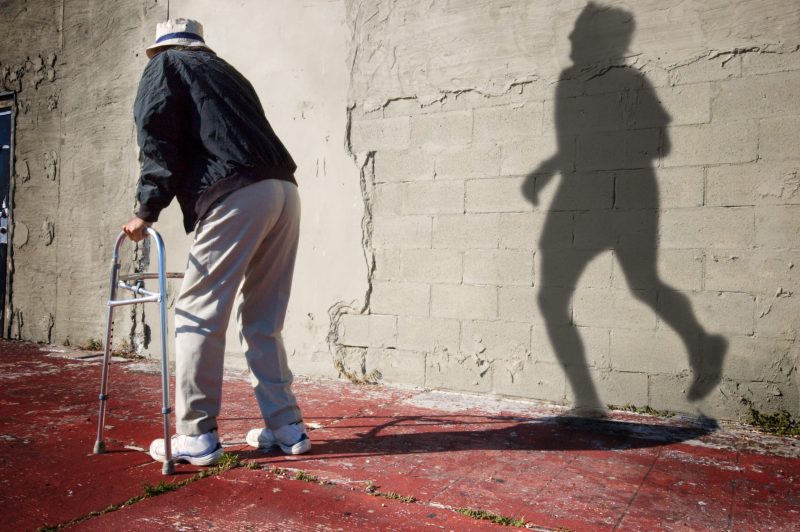
Image credit: Dreamtime. How you see me vs how I feel.
Our group described a more modern picture of ageing informed by their personal experiences.
They see older people as “fun”, “adventurous” and “outgoing”, confident with technology, and open to trying new things. For many, ageing feels like a new chapter rather than a crossing of some finish line. It is a time of freedom, changing social roles, and new interests. Rather than feeling ‘old’, many spoke about having a mindset that felt young and forward-looking.
“I don’t believe in just sitting around and doing nothing. I like to be on the go all the time. Since I’ve retired, I help my daughter with her business. I volunteer in a club. I just keep moving like I did when I was younger, just slightly slower!”
Social ‘age-policing’ of activities and even clothing that is suitable (or not) for older people was showcased in a recent article in The Guardian about Justin Trudeau (54) and Katy Perry (41) enjoying the Coachella music and arts festival. Its author, Emma Brockes wrote,
“It’s that photo of Trudeau in college-age uniform – scruffy jeans, white T-shirt and a baseball cap worn backwards in what looks to me like a definite reach for a modern-day JFK Jr vibe (good luck with that, Trudeau!) – that invites us to consider the relationship of middle-aged people to music festivals and conclude that, at some point, perhaps the dignified thing is to call it a day.”
Yes, as you could imagine, this article attracted many letters from angry readers stating that ageism has no place at music festivals, whereas older people who love music do. It was particularly ironic that at Coachella this year Iggy Pop, David Byrne and Norman Cook (Fatboy Slim) were all performing aged 79, 73 and 62 years old respectively! I bet they were not wearing what Ms Brockes would deem age-appropriate clothing either.
One of the best responses, was Sarah Munro’s, a London-based woman in her mid-50s who loves going to Glastonbury Festival. She noted,
“This kind of age-policing is as tired as it is misguided. The implicit argument – that festival attendance has an expiry date – rests on nothing more than cultural snobbery dressed up as social observation. There is no rulebook that reassigns your love of music at 50, and there is certainly no evidence that joy becomes less appropriate with age…The music, the joy, the community – these things do not lose their meaning because of a birthday. If anything, you appreciate them more.”
More nuanced realities
Although Open’s Authentically Ageing Community felt more positive about their own ageing relative to the prevailing stereotypes, they also recognised unmet needs and challenges older people face.
Some older people may be managing an increasingly complex daily regime of multiple medications, experience challenges from life on a fixed income, periods of loneliness, or incur progressively encroaching access needs as they age into new disabilities that means that products and services are less well designed for them or communication is more difficult. The participants stressed that the ease with which stereotypes latch onto these issues which can be a part of ageing. This masks a more positive story that they also wanted to share.
The reality is that both good and challenging things impact older peoples’ lives. These are not contradictions, they are co-habitants. Together they form less extreme (terrible or great) and more authentically age-informed self identities and experiences.
3. Representation of older people in marketing and media
As noted in our introductory article on research, by 2040, an estimated 63p of every £1 spent in Britain will come from older people. Older people already spend over half of all consumer expenditure (54p/1£ spent in 2018). This is a “£550 billion economic superpower”. Yet, 6 in 10 people aged 50+ in Britain feel ignored or undervalued as consumers.[12].
This consumer disconnect is reflected in advertising, where older people too often remain poorly represented and poorly portrayed.
Three main factors impact authentic age representation in advertising.
- Sufficient representation
- Authentic representation
- Diversity of representation
Sufficient representation
The most basic issue in advertising is the limited portrayal of older people. Only 29% of TV adverts feature characters over 50 (vs 4 in 10 of the population), and just 12% of those portrayed are in leading roles[13].
This represents a major opportunity for brands and advertisers to portray older people in their campaigns as they can quickly stand out, positively addressing the sense of increasing invisibility in media and advertising as people age.
Authentic portrayal
When older people are portrayed, their depiction often doesn’t resonate as being authentic by older consumers, instead falling into negative stereotypes or extreme subversions of these stereotypes.
Most of our Ageing Authentically Community felt that the portrayal of older people in advertising is “inauthentic” or “negative” and focussed on a narrow set of targeted services and themes specifically related to ageing and dying, not living (e.g., charity ads, funeral services, and life insurance). These findings align closely to larger studies of older people in the UK[12].
With our Ageing Authentically Community, we watched a selection of adverts with older people differently represented in them.
Stereotypes
Ads that reinforced stereotypes such as technophobes or lonely, vulnerable and isolated people were strongly disliked. So too were ads that seemed to be ‘trying too hard’ to overturn stereotypes through extremely positive portrayals of ageing. Neither resonated with the group who felt that their ‘more ordinary lives’ fall between these two extremes.
Super ageing extremes
Hyper-fit, wealthy, or thrill-seeking depictions of older people intended to be age-positive, may be true of some older people. However they tended to come across as inauthentic, “likely because they were created by younger people”. This could well be the case. Less than 10% of those working in advertising are over 45 (UK, USA and Australia)[14]. When juxtapositions are used, they rely on making the negative stereotype visible through their over-the-top countering of it.
Older people can find that insulting and disheartening rather than empowering.
“I think it [the ad] could have been done much more subtly. Having an older woman recklessly race a car is using a sledgehammer.”
“[The older man in the advert] he’s a really fit-looking guy, short beard, very trendy. I don’t think that, for me, that’s representative of older people at all. We’re just normal folks, balding and with all the other facial features. I mean that guy just looks like a top-end model. I can’t relate to him at all.”
“The only way they seem to be able to show older people in a positive light is when they’re aspirational, or shown as well-off, having a big car and all that kind of thing.”
Balanced portrayal, grounded in real values and experiences
What works is a more grounded, realistic approach that reflects a more balanced experience of later life, sometimes good, sometimes bad, mostly lived somewhere in between.
Authentic rather than exaggerated representation needs age-informed production decisions as well as talent. Those with the lived experiences can find effective ways to challenge stereotypes and bring interesting, inter-generationally relevant, brand aligned narratives to life.
Humour is welcome, but only when it is subtle and fun, rather than ‘gimmicky’, shock-led subversion, or, least preferred, when older characters were the target of the joke (‘on us’ rather than ‘with us’).
The most positively received ads such as the Amazon ad, Joy Ride, portraying three friends using Amazon to order cushions that would make their sleds more comfortable. This was deemed an “uplifting” portrayal of ageing that emphasised “choice”, “freedom”, “control”, and “youthful energy”. It aligned with how many older people see their own lives and aspirations.
“It absolutely nailed it! Older people were positive, technically able, light, and yeah, it’s really an uplifting advert. Loved it”
“Well, like everybody else, I love it every time I see it because they’re just living life to the full, and that’s what it’s all about.”
Diversity of representation
Our Ageing Authentically Community also wanted to see the diversity of older people reflected more fully in advertising, from cultural backgrounds to gender, clothing styles, interests and hobbies.
This was also reflected in 2025 research conducted by Human 8 for the Strat 7 Jigsaw for the Advertising Standards Authority UK [15]. Older women and older members of ethnic minority groups were much more likely to want to see people of their own age in adverts than the general population. Older women specifically noted that they felt ‘invisible’ or ‘irrelevant’ through their absence in advertising.
So what, for brands wishing to be age-inclusive?
Older people want more ads with well thought out plots and a wider range of characters, more authentically representing the lives older people. Narratives that evoke human (not just older age) feelings of excitement, fun and joy. Stories that don’t fight ageist tropes of frustration, confusion, and dreariness or their extreme inverse. They simply and genuinely represent a range of more multilayered, nuanced older age lives being lived.
Advertising and marketing are specifically important as our Ageing Authentically Community pointed out, as they shape self perceptions and those of others.
“Our notions of what we can do when we retire is conditioned by advertising. I mean how many adverts do we watch or do we experience in any day? That is colossal conditioning.”
A shift in adland thinking (agencies and clients) and resulting ad campaigns and marketing is desired. We will leave you with a final thought from one of our participants in this research.
“I think advertisers need to be so aware that they’re selling an image rather than a product. 70 is the new 50. You are not selling a [stereotypical] image of older people. You’re selling an image of vibrant, wonderful people with interesting, different, varied life experiences.”
Since this was published...Vogue released their May 2026 cover!
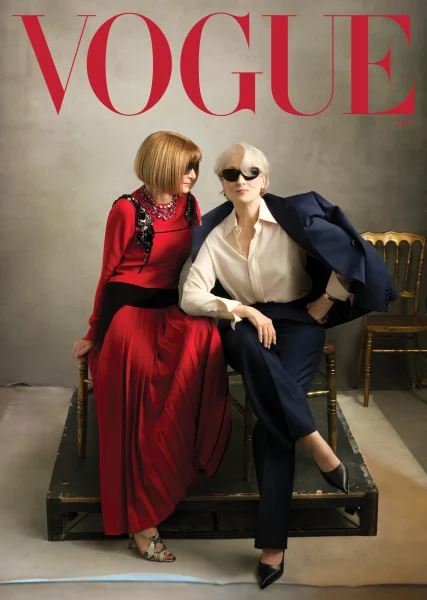
Image credit: Vogue May 2026 Edition
What a wonderful example!
Vogue has just published the above cover and feature story featuring Meryl Streep and Anna Wintour, both aged 76 and each wearing Prada. They look gorgeous, powerful, and exude energy with a hint of a private joke between them, something that they in their wisdom and connection have and we can enjoy from the outside thank you very much.
This is a perfectly shot and timed piece with Devil Wears Prada 2 hitting the cinemas this month and Anna Wintour recently having stepped down as Editor-in-Chief at Vogue. In the movie, a parody of life at Vogue, Meryl Streep plays the leading role of Miranda Priestly whose character is like a caricature of Ms Wintour.
Annie Leibovitz shot the photo of these stunning women in their shared 76th year of life and Grace Coddington styled it. Anna is 76 and Grace is 85 years old. It is spectacular, with them caught in a moment of style, cultural and social influence, personal character, connection and complicity to fun. So… maybe the industry is waking up to the opportunities of showcasing older women authentically (in front of and behind the camera)! Let’s hope so.
Open Inclusion can help you progress your age inclusive representation
Open Inclusion offer a range of services that can help you attract and retain this large, diverse and growing over 50s market. We have worked on award winning inclusive campaigns in the past for brands such as Curry’s, Guinness and Cadbury’s.
Market and design insight
We design and conduct age-inclusive research to help you engage with and listen to a range of older people in relation to your products, services, and brand communications. Engage with our age inclusive insight community to identify new insights exposing relevant motivations, realities, and unmet needs. This can help you and your organisation design positively impactful campaigns, brand imagery and effective age-inclusive language.
Co-production
If you have a campaign you are commissioning, pitching or producing that involves (or could involve) older individuals, we can help. We can engage people with relevant, authentic expert-by-experience support and guidance throughout. We can also provide professional guidance having worked with older communities for over a decade. Some of us have personal as well as professional experience, as the crinkle lines around our eyes when we smile will attest to!
Communications testing and accessibility
Open can bring a diverse range of older individuals to test your representation of older individuals in communication, including language, imagery or multimedia ad campaigns. This can help ensure it lands as planned and intended. Ideally this occurs at the end after it was grounded in market research at the start and created with co-producers as it was made. If not, don’t worry. Better now than getting the insight post launch!
We also support the accessibility of adverts to make sure everyone can appreciate them.
If you are interested in learning more about our service and to progress the value of your business through better age-inclusion, please contact us.
Authors
This report has been written by a happily intergenerational group of authors:
- Christine is a mid 50s, culturally confused (Australian, French, British) woman and parent to two young men who are just setting out in their careers in France. She still prefers to skateboard or cycle to meetings depending on where she is and which wheels work best.
- Af is a 55-year-old Londoner of Zambian heritage and father to two fully grown kids now doing their own thing. He can usually be found behind a camera lens, deep in a graphic novel, or convincing himself he definitely needs just one more pair of trainers (‘Time to grow up?’ Nah).
- Julius is a mid-30s mixed-race Briton who is either learning to surf or perfecting recipes when not head down in research or providing support as the primary carer for an ageing parent with a chronic health condition.
The original research was conducted with support from the fabulous Dr. Helen Potts, a postdoc researcher on healthy ageing from Kings College London.
References
[1] Government Office for Science (2016) Future of an Ageing Population.
[2] Sports England (2025) Active Lives Adults Survey, 2023-2024
[3] The Economist (2025) Meet the real screen addicts: The Elderly
[4] Centre for Better Ageing (2023) Almost one million more workers aged 65 and above since the millennium, new analysis reveals
[5] All Clear Travel Insurance (2025) 50 per cent rise in number of older people jetting abroad for winter holidays
[6] Centre for Better Ageing (2025) The State of Ageing in 2025
[7] Centre for Better Ageing (2024) The enormous contributions older people make to society – and the barriers holding them back
[8] Centre for Ageing Better State of Ageing Report 2023-24 (2024) Substantial Inequalities in Society that Significantly Impact the Quality of Life for Older People
[9] Age Action Alliance, Article (2026) A decade of life and two of healthy life expectancy: how much living in the right areas of the UK now means
[10] MullenLowe Group research (2022), which covered 7,373 adults in the UK aged 55+ as referenced in The Drum, 26 April 2022
[11] Saga (2023) “Generation Experience”: over-50s revealed as £600 billion economic superpower
[12] Human8, (2025) Silver in the New Gold. Innovation Beyond the Age Stereotypes
[13] Advertising Standards Authority (2025) The depiction of older people in ads
[14] Brodmerkel, Sven, and Richie Barker, (2021) Making Sense of Ambiguous Ageism’: A Multi-Level Perspective on Age Inequality in the Advertising Industry, Creative Industries Journal
[15] Strat7 Jigsaw for the Advertising Standards Authority, (2025) The Depiction of Older People In Ads