






We are getting older as a society, yet industry sectors are not maturing at the same speed in how we understand and respond to this seismic shift in demographics, attitudes, experiences, needs and preferences. Research included.
By 2040 older people will be spending 63p in every £1 in Britain, up from 54p in 2018 (International Longevity Centre, 2019)
Significant gaps in the age of insight
Consumer data is more available than ever to businesses. Insight however has some significant gaps.
As a new generation ages into retirement and beyond, few organisations are ensuring that the data gathered, understood and used to inform business decisions is well spread across the full span of relevant ages in relation to their spend. Insight today is not commonly well attuned to discover age-and experience-differentiated audiences’ spending drivers, attitudes, preferences and behavioural patterns.
Even fewer organisations are effectively understanding the significant differences between the ‘new old’ and past generations of older people. This is important as myths, stigma and historic spend patterns and preferences can continue to influence current decisions.
Most brands remain deeply anchored in their focus on the identities, attitudes, and lifestyles of younger generations, those currently less than 45 years old (Millennials, Gen Z and Gen Alpha).
This lack of understanding of those moving towards and beyond retirement age is limiting businesses.
The role of research and researchers
Beyond limited awareness and desire that continues to direct research to focus on younger generations, research practices can also get in the way of better understanding.
People aged 65 and over are often bundled together as if my 66 year old friend who still leads a company is the same as her 92 year old mum. Inaccessible tools and approaches limit many from participating, and panel reach into the older generations often doesn’t reflect the extent and diversity of our underlying communities.
- 1 in 5 people in the UK are 65 or older and almost 2 in 5 are 50 and over (ONS)
- The number of people aged 65+ is projected to rise by 50% in the next 20 years (Age UK)
- Nearly 80% of people living with sight loss are over 65 years old. 1 in 30 people of people in the UK experience disabling sight loss. This increases to 1 in 5 over 75 and 1 in 2 over 90. (RNIB)
- Almost 80% of people over 70 years old will be hard of hearing or deaf (RNID)
- Many other disabilities (including mobility, dexterity and memory) are also strongly age correlated
Research that is inaccessible or poorly aligned culturally or practically to the communities of older individuals, leads to a lack of good evidence. This exacerbates misunderstandings and enables myths and stereotypes to persist. It creates large, largely invisible market forces that are impacting brands in unpredictable ways.
Meanwhile, this thriving group of underheard older individuals continually evolves and diversifies – both from prior generations of older people and from itself when younger.
For most organisations and brands, it would be immensely valuable to better understand those who are ageing into older age.
This can help shine a light on significant market drivers impacting your sales, customer experiences, brand perception and loyalty (and internal talent) that are not sufficiently investigated, understood, prioritised or designed for.
Five foundations of age inclusive research
Age inclusive research is not complex. However it requires some knowledge, connection and considerations that are not common.These include:
- Awareness: understanding that age-informed experiences are valuable at many ages, specifically including those of older people, across most products and services. There is a chicken and egg problem here also. If you are underrepresented in your brands’ sales to older people, is it because you are not understanding and meeting older consumers’ needs well? The starting point is understanding if there is a gap and recognising that age-related insight gaps matter.
- Commissioning: Are you requiring researchers (in house or external agencies) to reach to older individuals? When you do request research with older people, are you breaking it down by more specific age bands beyond just +65, and across a range of other factors influencing and differentiating experiences such as ethnicity, region, access needs, sexual orientation etc?
- Reach and Representation: Are you clear who was and wasn’t engaged in the research? No research fully represents any group, but over time are you getting richer insights or always going back to a more homogenous subset of older people?
- Accessibility: Are your research methods accessible? Do they make it easy for respondents to participate who have access needs such as sight loss, reduced hearing, limited dexterity, energy or memory challenges, all of which are more prevalent in older respondent cohorts? What options do you offer? Are you making assumptions about people’s access, capability and interest in engaging in diverse formats such as digital?
- Cultural alignment: Do you or your team have the language and cultural competence to connect and understand older consumers with ease? Only 3% of people who work in insight in the UK are over 55, vs 22% of the population (Silver Insights Generation). Professional and/or personal experience counts – although we all need to keep learning proactively, as our past experiences may anchor expectations or assumptions which can be limiting. Age-inclusive alignment or misalignment impacts reach, language and research ease and suitability. In summary – research quality.
No other age cohort seems to be so homogenised in how they are perceived.
If you felt that 25 – 34 year olds all have the same digital capability or interest you would likely check yourself. However digital assumptions about older people are more consistently made. Confidence and capability of those aged 75-84 (some of whom actually designed and built the internet) vary significantly. Assumptions established by average levels of digital competence 20 years ago – which themselves are problematic – about the generation of older people at that time, still hold sway and anchor perspectives today. This generation of older people are very different from the previous generation of older people in so many ways – digital included.
A new blog series on the Silver Gold era of age inclusion
In our upcoming series of blogs on age inclusion which will each be published here on our website, we will cover four topics over the next few months,
- Identity and representation
- Digital lives
- Retail experiences and preferences
- Social and environmental values
Our thoughts are informed by primary and secondary research conducted by the team at Open and supported through collaboration with Ageism is Never in Style and Yonder Data Solutions
In September 2026 we are planning an event in London engaging brands who wish to learn more about the value of more age-inclusive and age-effective insight, representation and solutions.
The demographic shifts are here. The “Silver Economy” is valuable and growing into an even larger golden opportunity for brands. Older people are impacting business performance and society more broadly. Yet most commercial organisations remain deeply unprepared for an ageing society and unaware of the implications on their brands.
Those brands that are taking the time to listen to, engage with, design for and authentically represent the generations who are ageing into later-life stages, are the vanguard of success in the coming decades. We will share some of their stories.
By taking the time to ask and understand, they can see into what for many remains unknown. This will enable them to thrive as they have the insight required to prioritise, adapt their products and represent the broader reality of their markets. Older people already represent over half of all spend in the UK and are growing to represent two thirds of all spend in the coming decades. They/we have new preferences and needs, attitudes held and attitudes others may have of them. It is a large market that can be better designed for if it is better understood.
Join us on this investigation of the ‘new old’. It is now the time to move on from simply worrying about the implications of an ageing society to learning about the rich, nuanced, practical and cultural elements of it, so you can better design products, services and spaces to thrive, both now and into the future.
‘New Old’ is itself is not a new concept as it was the name of a brilliant pop-up exhibition almost a decade ago at the Design Museum supported by the Helen Hamlyn Centre for Design, RCA.
Are you interested in richer age-inclusive insight? We can help.
Open Inclusion is a disability and age-inclusive research agency. We have worked for over a decade conducting research with people who are ‘just getting older’ as well as those with specific access needs and experiences who are over 50, 60, 70 and 80. If you would like to investigate conducting research with your older consumers, citizens or stakeholders, please contact us.
Are you based in London?
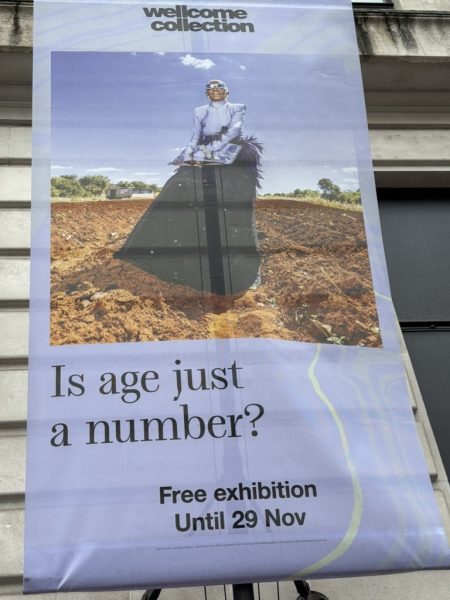
If you are based in London there is an excellent exhibition on, The Coming of Age at the Wellcome Collection (near Euston) until 29 November 2026.
Having visited it last weekend we can highly recommend it!
It has great content, from historical images and characterisation of older people, many works of art and culture showcasing ageing through a range of lenses, to a beautifully captured film made with 100 women over 50 from Manchester sharing their experiences, and wants as they age. The exhibition both celebrates different ages and experiences of ageing as well as dives into the myths, stigma, experiences of and attitudes to ageing. I particularly appreciated the many diverse experiences showcased of ageing, illustrating the diversity of this large heterogenous community with experiences also impacted by diverse cultures, genders, other experiences of marginalisation, region/location, wealth, health and more.
Authors
This report has been written by a happily intergenerational group of authors:
- Christine is a mid 50s, culturally confused (Australian, French, British) woman, parent to two young men who are just setting out in their careers in France. She still prefers to skateboard or cycle to meetings depending on where she is and which wheels work best.
- Af is a 55-year-old Londoner of Zambian heritage and father to two fully grown kids now doing their own thing. He can usually be found behind a camera lens, deep in a graphic novel, or convincing himself he definitely needs just one more pair of trainers (‘Time to grow up?’ Nah).
- Julius is a mid-30s mixed-race Briton who is either learning to surf or perfecting recipes when not head down in research or providing support as the primary carer for an ageing parent with a chronic health condition.